19 Oct 2026
9:00 am - 7:00 pm - Sat - Thus
Professional legal guidance starts here.
Complete the form below. Our team will contact you to confirm your appointment.
9:00 am - 7:00 pm - Sat - Thus
Paltan, Dhaka - 1217
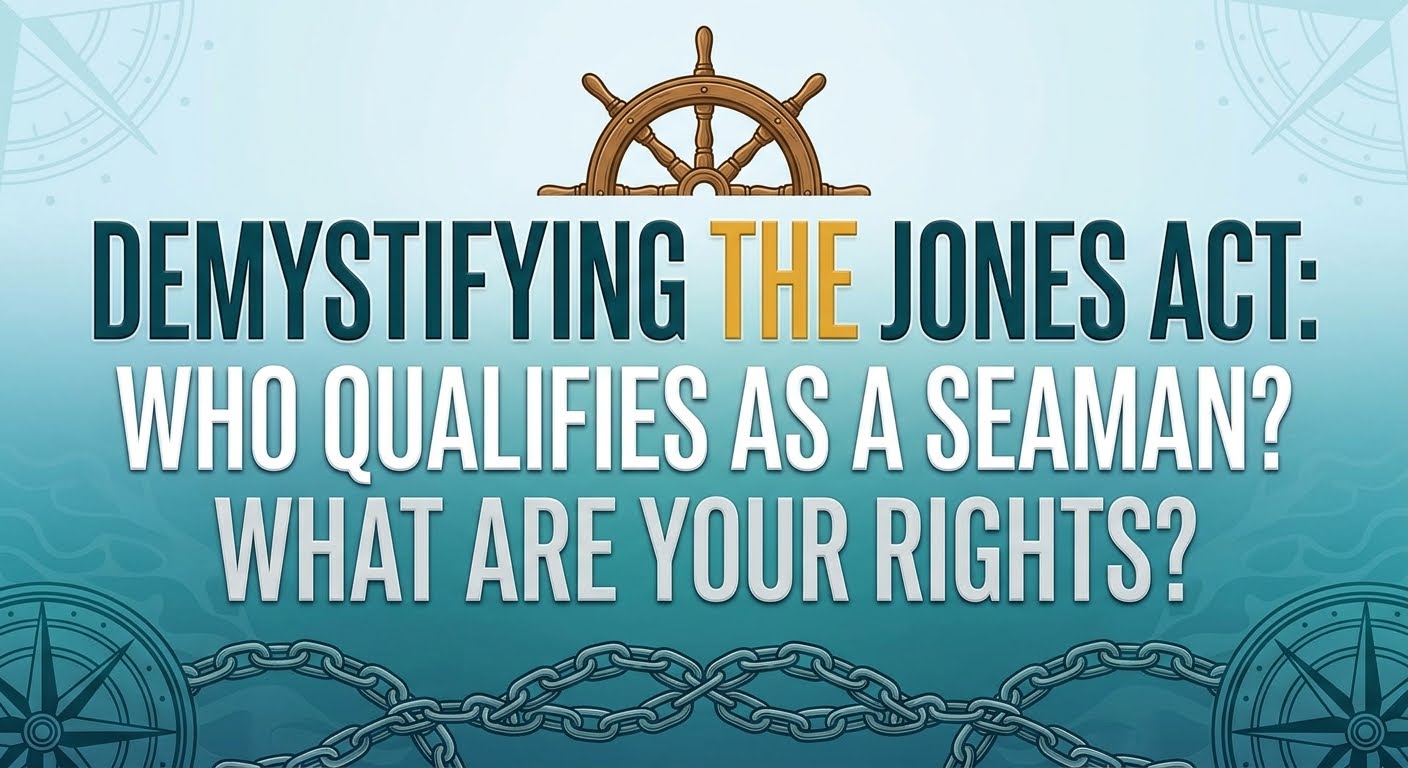
The Merchant Marine Act of 1920—commonly known as the Jones Act—is a foundational federal statute designed to protect workers who perform their duties on navigable waters.
Unlike traditional land-based employees who rely on state workers’ compensation systems, maritime workers face distinct hazards that require specialized legal protections. This comprehensive guide breaks down the essential aspects of the Jones Act, starting with the strict legal test for "seaman" status.
To qualify, a worker must have a connection to a vessel in navigation (or a identifiable fleet of vessels) that is substantial in both duration and nature, typically spending at least 30% of their working time aboard.

The article explores the critical differences between a Jones Act claim and standard workers' compensation, emphasizing that Jones Act recovery allows for damages covering pain and suffering, lost wages, and future earning capacity, but requires proving employer negligence—even under a reduced threshold of proof.
Additionally, it details the employer’s absolute obligation to provide "Maintenance and Cure" (living expenses and medical care) regardless of fault. Readers will gain actionable insight into immediate steps to take after an onboard injury, including mandatory reporting protocols, medical documentation strategies, and avoiding common pitfalls when giving recorded statements to insurance adjusters.
Your email address will not be published. Required fields are marked *

0 Comments
No comments yet. Be the first to share your thoughts!